




AGEL Leadership Development Program Successfully Held
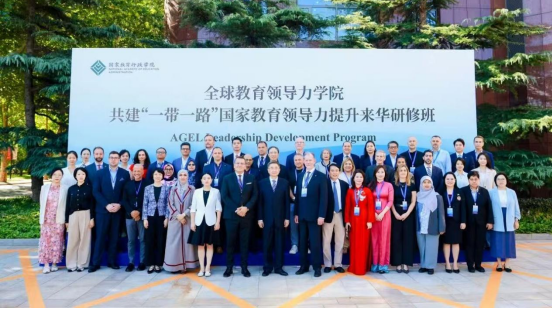
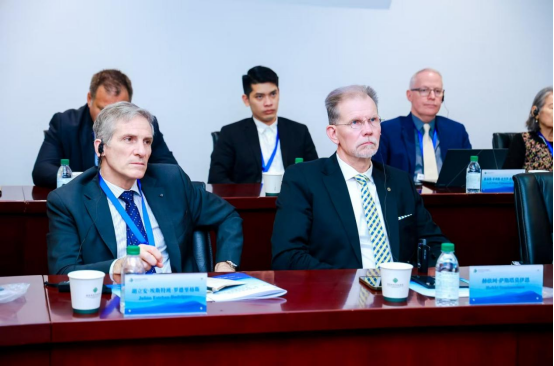
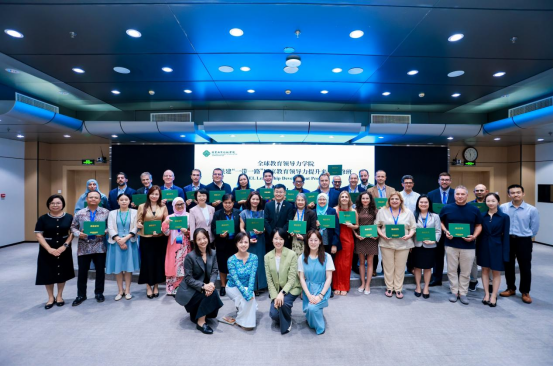
The AGEL Leadership Development Program was successfully held at NAEA in Beijing from September 13 to 19, 2026. Peng Shi, Executive Vice President of NAEA, attended the opening ceremony, while Zhao Lei, Deputy Director-General of the Department of International Cooperation and Exchanges of the Ministry of Education of China, attended the closing ceremony. Janko Samardžić, Assistant Minister of Education of Serbia, delivered remarks as a representative of the participants at the opening ceremony. The opening and closing ceremonies were presided over by Chen Rui, Vice President of NAEA. A total of 35 education leaders and representatives from 16 countries across Asia, Europe, North America, and South America participated in the program.
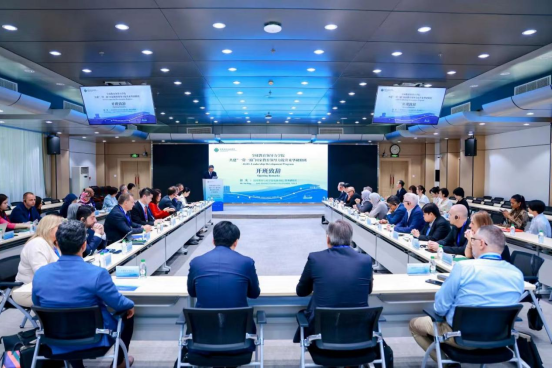
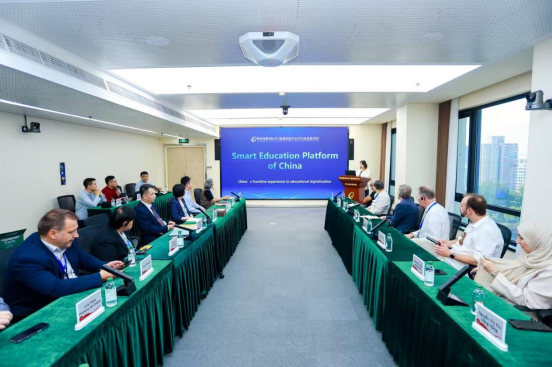
With “Digital Education Governance” as its central theme, the program featured five major course modules, combining policy learning, topical visits, and peer-to-peer exchange. Officials from relevant departments of the Ministry of Education of China, including the Department of International Cooperation and Exchanges, Department of Development and Planning, Department of Higher Education, Department of Vocational and Adult Education, and Department of Basic Education, delivered presentations on China’s policies on international education cooperation and the 15th Five-Year Plan for education development. Participants also engaged in policy dialogues with Chinese education officials on issues of common interest.
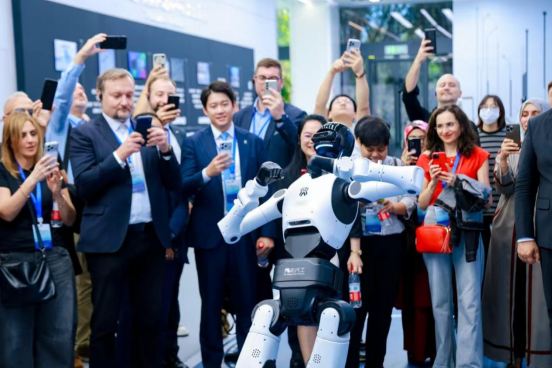
Participants visited the Center for Educational Technology and Resource Development of the Ministry of Education, where they gained an in-depth understanding of China’s public service system for digital education resources and the development of the National Smart Education Platform. They also visited the Beijing Humanoid Robot Innovation Center and iFLYTEK to learn about the latest developments in embodied intelligence and practical applications of artificial intelligence in advancing the digital transformation of education.
At Tsinghua University, Beijing Polytechnic University, Beijing Sanfan Middle School, and Tsinghua University Primary School, participants explored practical approaches to digital education governance, industry-education integration, smart campus development, AI-assisted teaching, and the cultivation of students’ digital literacy across different types and levels of education.
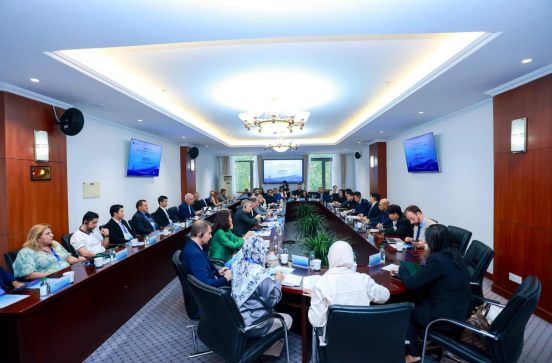
Through practice-oriented dialogues, participants engaged in in-depth discussions with 85 Chinese education professionals participating in training programs at NAEA on topics including the digital transformation of education, education governance, teacher development, talent cultivation, and resource sharing. Participants shared experiences based on educational practices in their respective countries, explored common challenges, and built greater understanding and consensus. The program also included a range of cultural activities, providing participants with opportunities to deepen their understanding of China’s history, culture, and society.
Participants spoke highly of the program, noting that its rich content and diverse formats not only deepened their understanding of China’s educational reform, development, and digital transformation, but also provided a valuable platform for education professionals from different countries to engage in equal dialogue, share experiences, and pursue practical cooperation.(Contributor: Jingrui Jiang)
 京公网安备 11011502002810号